
Vision Zero for All: Protecting Emergency Responders on the Road
CARSP Webinar Series
Date/Time
Date(s) - November 25, 2025
12:00 pm EST - 1:00 pm EST

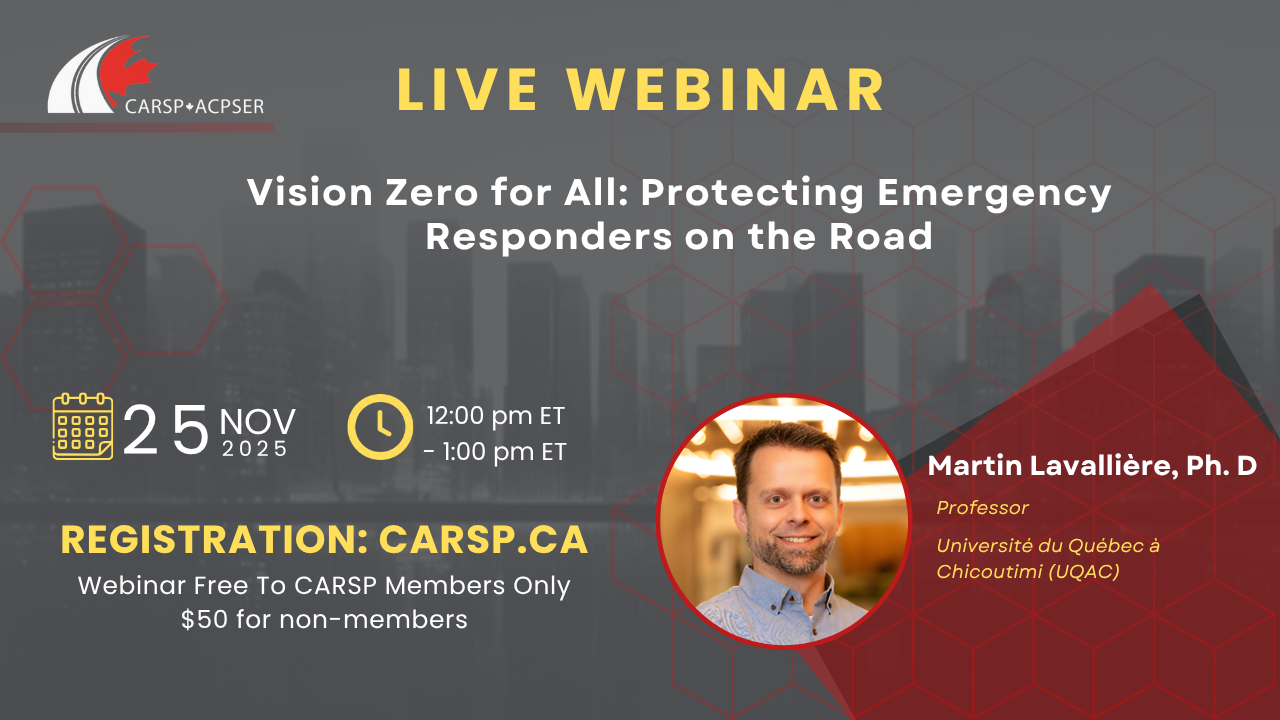
Emergency responders, police officers, firefighters, and paramedics, regularly work in high-risk roadside environments where a single moment of inattention from drivers can have fatal consequences. This webinar explores how the Vision Zero framework, which aims to eliminate traffic fatalities and serious injuries, can be extended to include those who protect and serve on our roads.
Participants will gain insights into the unique exposure risks faced by emergency responders and how systemic safety principles—such as safe road design, appropriate vehicle technology, intelligent traffic control, and behavioral change strategies—can mitigate these dangers. Case studies and data from various jurisdictions will illustrate effective interventions, including enhanced “Move Over” laws, improved roadside scene management, visibility standards, and driver education initiatives and curriculum from initial training to continuing education.
The session will also emphasize the importance of interdisciplinary collaboration among transportation agencies, emergency services, and policymakers to build a road environment that safeguards both the public and responders. Attendees will leave with a clearer understanding of how Vision Zero principles can be operationalized to create safer, more resilient response systems for everyone on the road.
Registration for this webinar is FREE for current CARSP members. Non-members are welcome to purchase a ticket.
Speakers
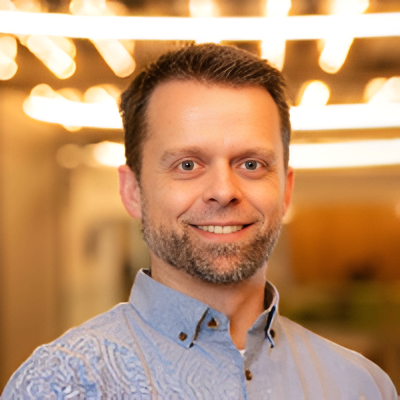
Martin Lavallière
Martin Lavallière, Ph.D. is a professor of kinesiology at the Department of health sciences at Université du Québec à Chicoutimi (UQAC) since August 2016. He received his B.Sc. (2005), M.Sc.(2007), and Ph.D.(2013) in kinesiology from Uni-versité Laval (Québec, Canada). He completed a postdoctoral fellow at the MIT AgeLab (2013-15) where he evaluated the impact on driving performance of aging, navigation and communication technologies. He completed a second postdoctoral fellow at HEC Montréal (2015-16) working on the impact of work-related colli-sions. His research evaluates in-simulator-based training program combined with driving specific feedback to improve on-road driving behaviors in multiple clien-teles (ex. Emergency respondents, traumatic brain injury, PTSD, etc.). He has suc-cessfully completed numerous projects working closely with emergency respond-ents to address this critical health and safety topic. He serves as a board member of the Quebec national board of research on road safety (RRSR), and different ISO committees regarding human-machine interface.