
Automatic Cruise Control
How does it work?
Automatic Cruise Control (ACC) uses distance-sensing technology that automatically reduces or accelerates the speed of the vehicle to maintain a constant distance between two vehicles.
ACC systems are an extension of conventional cruise control (CCC) systems that adjust vehicle speed and provide a specific distance to the vehicle ahead by automatically controlling the accelerator and/or brake. A key part of an ACC system is the range sensor, such as a radar, lidar or video camera, which measures the distance and relative speed of the two successive vehicles. In the absence of a vehicle ahead, a vehicle equipped with ACC travels at a speed set by the user controlling the accelerator, much like operating a CCC system.
Pros
- Increases comfort and safety for the driver, is functional for long trips, and in turn optimizes fuel use and engine performance.
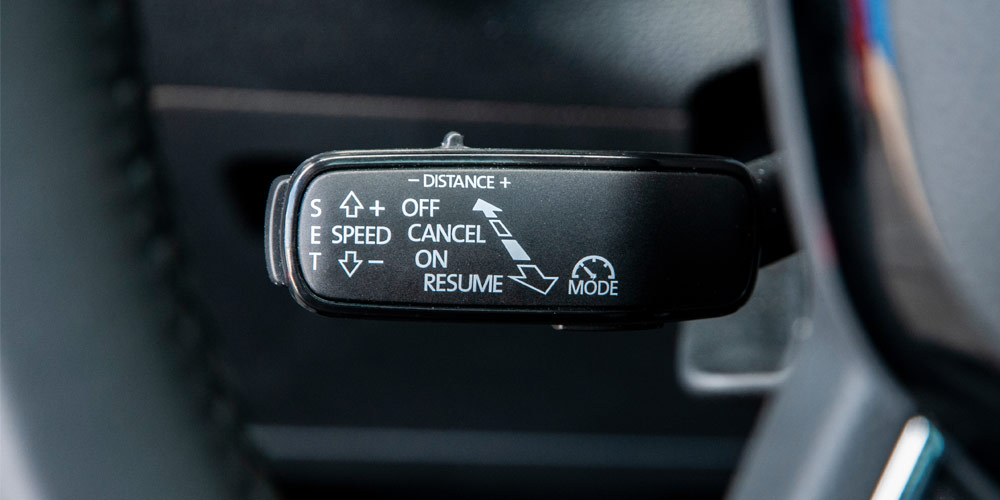
- It allows you to set and manipulate the speed more precisely, for which steering wheel controls are available.
- Considerably improves attention to the rest of the elements of the road and avoids both visual and physical effort that can occur in the driver.
- By maintaining safety distances and regulating speed, it improves traffic at an overall level, by generating a smoother drive (i.e., all vehicles traveling at same speed), all the while reducing accidents.
- This technology is becoming increasingly standard or optional in best-selling vehicles.
Cons
- Depending on where you drive, ACC can generate a type of relaxation on the part of the driver that can easily distract them (i.e., lower concentration on the driving task).
- Depends on the terrain and the qualities of the road for optimal performance.
- The effectiveness of automatic braking is not comparable to that of the brake pedal, which is why driver vigilance is required.
- If drivers can set the following distance, some of them may set it so they are too close to a vehicle in front of them increasing the risk of a rear end collision in case of a rapid necessity of takeover.
Common names
- Adaptive cruise control
- Adaptive cruise control with low speed
- Adaptive cruise control with tail assist
- Adaptive cruise control with stop
- Adaptive cruise control with Stop & Go
- Advanced Intelligent Cruise Control (ASCC)
- Dynamic cruise control of all speeds
- Camera-based cruise control
- Distance assistance
- Distance pilot
- Distronic
- Active Distronic
- Distronic Plus
- Cruise control with dynamic radar
- Cruise control with high-speed dynamic radar
- Smart Cruise Control (ICC)
- OEM 1 Adaptive cruise control with Stop & Go
- OEM 2 Radar cruise control
- Smart cruise control (stop/start)
- Traffic-conscious cruise control
Latest Publications on PubMed
Search results for: adaptive cruise control
- Feed has no items.