
FEATURED CARSP FOUNDER
BIO
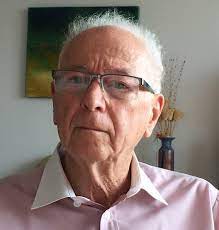
Dr. Ezra Hauer is a Professor Emeritus of the University of Toronto. Dr. Hauer’s education includes a Ba. Sc., Civil Engineering, Technion, Israel; Ma. Sc. Transportation and Traffic Engineering, Technion, Israel; and Ph.D., University of California, Berkeley, USA (1968).
In 1970, Dr. Hauer emigrated with his wife and two young sons to Canada, taking a professor position with the Faculty of Civil Engineering of the University of Toronto, and embracing Canada as their permanent home.
He taught graduate courses in several areas of Transportation Engineering, most notably a course in Road Safety that was likely the first of its kind anywhere in the world. He also taught an undergraduate course to Civil Engineers in Probability and Statistics, his forte that fostered his pioneering work in developing statistical methods for road safety analysis.
He was the founder and coordinator of a "Multidisciplinary Safety Research Group" which met regularly from (1981-1993) and which spawned the Canadian Association of Road Safety Professionals (CARSP). Dr. Hauer served as an associate editor of the "Accident Analysis & Prevention (1982-1995) and a paper convener (1996-2002).
His society memberships included:
- Canadian Association of Road Safety Professionals (Vice-President (1985-86) and President (1987-88))
- Professional Engineers of Ontario
- Fellow member of the Institute of Transportation Engineers and has held office (Director - 1993-95) in the ITE Transportation Safety Council.
Dr. Hauer has been named to several U.S. Transportation Research Board (TRB) committees and panels, such as: Committee for the Study of Geometric Design Standards (1984-1987); Committee on Safety Data, Analysis and Evaluation (Emeritus member); Committee on Methodology for Evaluating Highway Safety Improvements (Chair (1993-95) and Emeritus Member), among others.
Dr. Hauer has served on a number of U.S. National Academies' NCHRP panels and has held office in the International Committee of Symposia on Traffic and Transportation Theory (an active member since 1983). Dr In 2005, Dr. Hauer was appointed as Member Emeritus of U.S. Transportation Research Board. Dr. Hauer has also been a member of the Advisory Board, International Association of Traffic Safety Sciences, Japan, since 1986.
Since retiring from active teaching at the University of Toronto in 1997, Dr. Hauer has dedicated his time to innovative research, consulting, and developing and delivering road safety training to researchers, practicing engineers and planners.
Questions:
How did you first get involved in road safety? Was there any person/s who encouraged or inspire you to get involved in road safety?
You ask how I got into road safety... not sure, but I can say how I got into transportation engineering. I worked as a surveyor and then, without proper engineering education, was involved in designing roads. That drew me into the study of transportation engineering. But road safety? I am not sure.
For my master’s thesis, recklessly and for reasons I do not understand, I chose to research the role of age and experience on the safety of young drivers, a topic for which neither my work experience nor civil engineering education prepared me. Later, while doing my Ph.D, I got a good education in quantitative methods and, like many others, was infected by the delusion that mastery of these methods enables one to tackle all kinds of subjects: airport design, bus fleet composition, urban goods movement, etc.
Eventually, and still not fully cured from that delusion, and again for reasons which I do not know, I returned to my first love... road safety.
Tell us about the area of road safety that you have mostly been involved with in your career?
That confession perhaps also answers your question about what area of road safety I was most involved in. It seems to me that much of what I worked on centered on issues of cause and effect. That is, to determine what change in crash frequency and severity is caused by various factors.
On reflection, some of the aforementioned recklessness and delusion is still manifest in much of what worked on, for I did not always confine myself to the study of the safety effect of factors related to road design and traffic engineering.
I also tackled questions of method, about how to find out what the effect of an intervention is, be their focus on roads, traffic, road users or vehicles. It is this richness of contexts, disciplines, fields of learning, and of good people that makes work in road safety so interesting. I did not know it when I first fell in love, but I am grateful for life’s chances that brought me to it.
Describe a current initiative of yours that you would like to share with CARSP members.
Your third question is about my current initiative. Well, at the ripe old age of 91, speaking of initiatives does not sound quite right. But since my love of road safety has now matured, I can perhaps reflect, not on initiatives, but on concerns.
You may have read my opinion piece in the Globe and Mail as republished in the 2023 Fall issue of this CARSP SNN. The concern there is that we still live in the old ‘blame the road user’ world; Vision Zero sloganeering aside, in Canada the potential of the Safe Systems approach is still largely untapped, and this is perhaps also a response to another one of your questions about tasks for the future: make it clear that it is the responsibility of those who provide the transport system to ensure that road users who obey the rules are not severely injured.
How does road safety influence your personal life’s choices?
And now to the last question: How does involvement in road safety affect my own life choices? I will use the question to make a point.
As you can imagine, my vision is not what it used to be and, when in company, I put in my hearing aid. To continue to drive, every two years I have to go and prove to the Ontario Ministry of Transport that I am neither blind nor suffering from dementia. Numbers show that, in spite of common prejudice, my age cohort is not much of a menace to other road users, certainly not to an extent that would justify the large social damage caused by this biennial ritual. It is a relic of the blame-the-driver era, an atavism discarded by almost all jurisdictions around the globe a long time ago. So there, I got it off my chest.